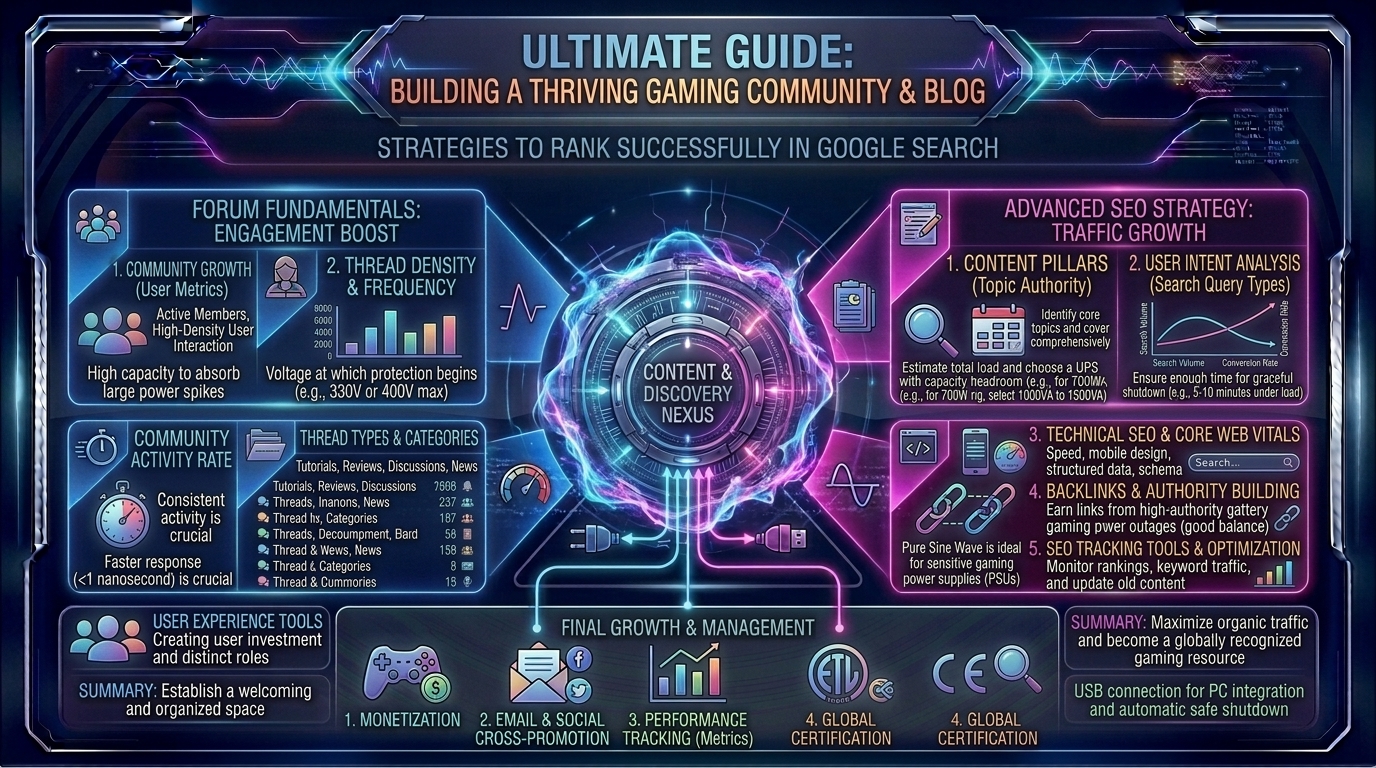
How to Build a Thriving Community Website and Gaming Blog That Ranks Successfully in Google Search Results
Introduction: Creating a Beacon in the Digital Gaming Landscape
The internet is saturated with millions of gaming blogs, review aggregators, and social hubs fighting for attention. For a new platform like thegamerbuzz.com, carving out a dominant space requires far more than just publishing random news articles or opinion pieces. It demands a calculated fusion of technical performance, topical authority, community engagement, and razor-sharp Search Engine Optimization (SEO).
Whether you are catering to casual players, hardcore esports competitors, or hardware enthusiasts across key digital hubs like Texas, New York, California, Washington, and San Francisco, building a sustainable community website means creating a destination where users want to linger, interact, and return.
At thegamerbuzz.com, we embrace the blueprint of high-performance publishing. This comprehensive masterclass breaks down the exact strategies you need to build, optimize, and rank a thriving gaming blog and community hub in Google search results.
Part 1: Establishing Your Niche and Topical Authority
Google’s search ranking algorithms heavily prioritize E-E-A-T (Experience, Expertise, Authoritativeness, and Trustworthiness). If your gaming blog tries to cover everything from mobile puzzle games to enterprise cloud servers, you will dilute your authority and struggle to rank against massive legacy media outlets.
+---------------------------+-----------------------------------+-----------------------------------+
| Strategy Approach         | Broad, Scattershot Approach       | Focused Topical Authority Model   |
+---------------------------+-----------------------------------+-----------------------------------+
| Content Focus             | Random news across all platforms  | Deep-dives into specific gaming sub-niches|
| Keyword Competitiveness   | Impossible to win against giants  | Targets low-competition long-tail terms|
| User Retention            | Low bounce rate, fleeting traffic | High engagement, loyal community  |
| Google Ranking Potential  | Minimal organic traction          | Rapid compounding keyword growth  |
+---------------------------+-----------------------------------+-----------------------------------+
1. Finding Your Unique Angle
To break into competitive gaming SERPs (Search Engine Result Pages), start by focusing on specific content pillars where you can offer superior depth. This might include hardware optimization guides, deep-dive monetization analysis, controller accessory breakdowns, or regional esports culture.
2. Building Topic Clusters
Instead of treating every article as an isolated island, organize your blog using the Hub-and-Spoke (Topic Cluster) model. Create a comprehensive “pillar” page covering a broad topic (e.g., The Ultimate Gaming Setup Guide), and link it outward to dozens of specific “spoke” articles (e.g., Best Controller Docks, Monitor Buying Guides, Surge Protectors). This interconnected architecture signals deep topical authority to Google’s crawlers.
Part 2: Technical SEO and Core Web Vitals Optimization
Gamers are accustomed to blazing-fast frame rates and instantaneous inputs. If your community blog takes seven seconds to load, users will bounce back to Google instantly, signaling to the algorithm that your site offers a poor experience.
1. Mastering Core Web Vitals
Google evaluates user experience through Core Web Vitals, focusing on three key metrics:
- Largest Contentful Paint (LCP): Measures loading performance. Your main article headline and hero image should load in under 2.5 seconds.
- Interaction to Next Paint (INP): Measures page responsiveness when a user clicks a button or navigates a menu.
- Cumulative Layout Shift (CLS): Measures visual stability. Ensure images and ads do not shift text around while the page is loading.
2. Mobile-First Indexing and Speed
A massive percentage of traffic across metropolitan tech regions like San Francisco, New York, and Austin accesses gaming content via smartphones on commutes. Ensure your layout features responsive design, readable font sizes (minimum 16px body text), easily tappable buttons, and WebP compressed images that strip away unnecessary file bloat.
Part 3: Keyword Research Strategy for Gaming Blogs
Targeting high-volume head terms like “best video games” or “gaming news” on a new domain is an exercise in futility. You must hunt where the giants aren’t looking.
+-----------------------+-----------------------------------+-----------------------------------+
| Keyword Tier          | Example Target                    | SEO Viability for New Blogs       |
+-----------------------+-----------------------------------+-----------------------------------+
| Head Term             | "Gaming Headset"                  | Extreme difficulty (Ign, Reddit)  |
| Mid-Tail Term         | "Best wireless gaming headset"    | High competition                  |
| Long-Tail Problem     | "How to fix mic static on PS5"    | High conversion, easy early rank  |
+-----------------------+-----------------------------------+-----------------------------------+
1. Prioritizing Long-Tail Intent
Focus heavily on problem-solving informational queries, troubleshooting guides, and niche comparisons. When a gamer searches for a specific technical quirk or a detailed accessory buying guide, they have high intent. Ranking for hundreds of these specific long-tail keywords builds the foundational domain authority needed to eventually tackle broader competitive terms.
Part 4: Building an Engaged Community Ecosystem
A gaming blog tells people what is happening; a community website gives them a place to belong. To transform passive readers into loyal community members, you need to integrate interactive elements directly into your platform:
- User-Generated Discussions: Embed active comment sections, community forums, or Discord widget integrations where members can debate patch notes, share custom setups, and trade hardware recommendations.
- Interactive Content: Incorporate polls, hardware recommendation quizzes, and user rating systems. Interactive content dramatically increases dwell time, which sends strong positive engagement signals to search engines.
Part 5: Regional SEO and Audience Targeting
Tailoring your content strategy to reflect the pulse of major gaming and tech centers gives your brand a localized identity:
- Urban Tech Hubs (San Francisco, New York): Focus content around high-end desktop builds, space-saving urban desk layouts, portable monitors, and fast-paced live-service trends.
- Spacious Suburban Hubs (Texas, Washington): Target guides involving expansive multi-console home theater setups, dedicated room lighting, and heavy-duty power protection.
Frequently Asked Questions (FAQ)
1. How long does it take for a new gaming blog to rank in Google search?
Typically, new domains go through an initial sandbox period where Google evaluates content quality and consistency. With a targeted long-tail keyword strategy and consistent publishing, you can expect to see meaningful organic traction within 4 to 8 months.
2. Should I use AI to write my gaming blog posts?
AI is a powerful tool for outlining, structuring, and brainstorming, but publishing raw, unedited AI content will hurt your rankings. Google prioritizes E-E-A-T, meaning your articles must feature real human expertise, original insights, first-person testing, and unique value that AI cannot replicate.
3. How many articles should I publish per week?
Consistency matters more than raw volume. Publishing 2 to 3 deeply researched, highly optimized articles per week is far more effective for long-term SEO than spamming 10 low-quality, thin posts daily.
4. What is the best platform to build a gaming community website?
Self-hosted WordPress remains the undisputed king of SEO flexibility, offering thousands of plugins for speed optimization, schema markup, and forum integration, though platforms like Ghost are also popular for pure blogging.
5. How do I get high-quality backlinks for my gaming blog?
Earn backlinks naturally by publishing original research, unique hardware teardowns, comprehensive infographics, or in-depth industry analysis that other sites naturally want to cite as a source.
6. Why is internal linking so important for SEO?
Internal links act as navigational highways for Googlebot, helping search engines discover new pages quickly while passing “link juice” from your high-authority pages to newer, growing articles.
7. Do I need schema markup on my gaming blog?
Yes! Implementing structured data (such as Article schema, FAQ schema, and Review schema) helps search engines understand your content context and unlocks rich snippets in search results, dramatically increasing click-through rates.
8. How can I monetize my gaming community website?
Diversify your revenue streams using a mix of display advertising (like Raptive or Mediavine once traffic thresholds are met), affiliate marketing (Amazon Associates, gaming hardware affiliate programs), and sponsored community partnerships.
9. What should I do when an old article’s information becomes outdated?
Never let your content rot. Update old guides regularly with new data, fresh product links, and updated timestamps to signal to Google that your content remains fresh, accurate, and relevant.
10. Where can I find ongoing guides on scaling my gaming platform?
For continuous tutorials on digital publishing, SEO growth hacks, and gaming culture, keep your browser locked right here to thegamerbuzz.com!
Conclusion
Building a thriving community website and gaming blog that successfully ranks in Google search results is a marathon, not a sprint. By combining rigorous technical SEO, a laser-focused topical authority strategy, long-tail keyword targeting, and an interactive community design, you can transform a simple domain into an authoritative digital destination.
At thegamerbuzz.com, we live and breathe gaming culture. Optimize your site structure, serve your audience with genuinely valuable content, and watch your rankings climb to the top!
Leave a Reply