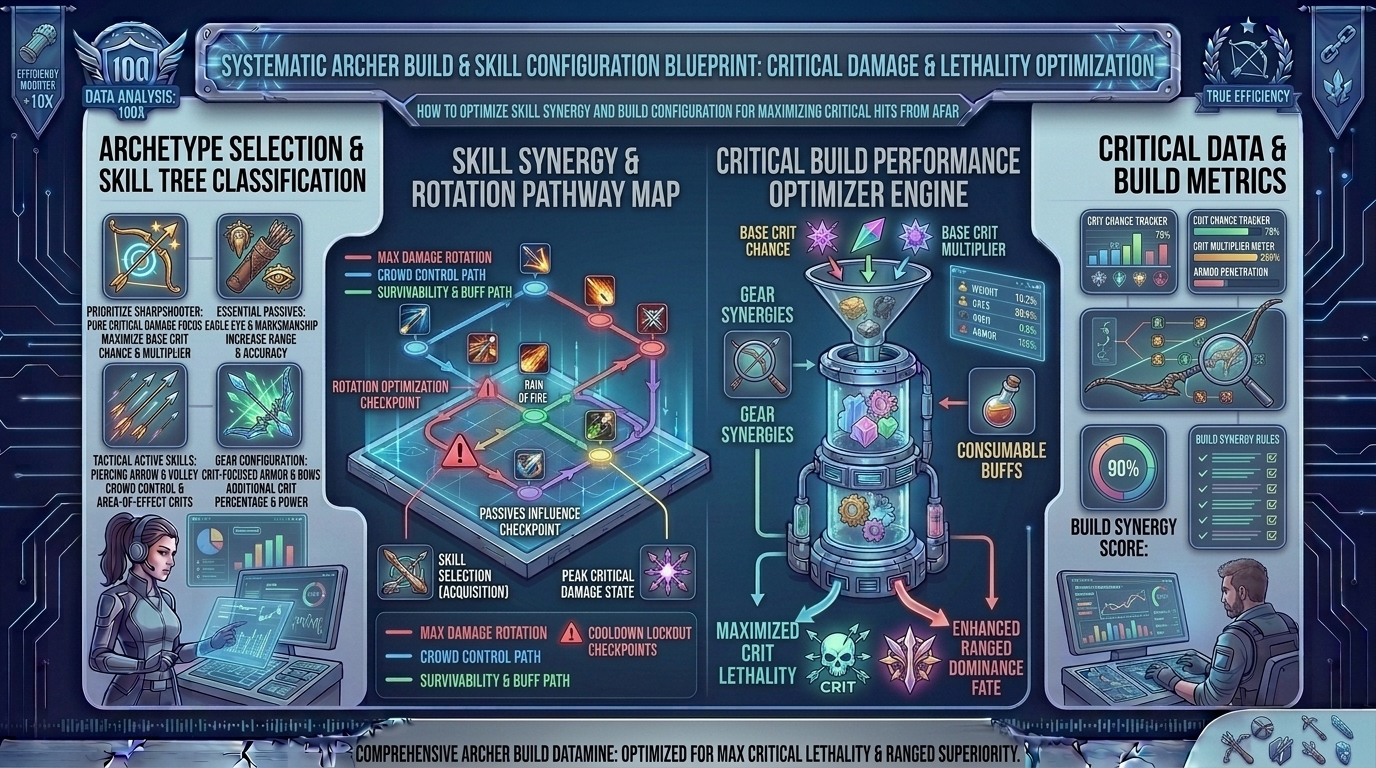
There is an unmatched level of satisfaction that comes with playing a ranged archer in modern action role-playing games (ARPGs) and open-world adventures. Standing safely on a distant ridge, drawing back a composite or magical bow, and unleashing a single, perfectly calculated projectile that connects with a glowing yellow or red critical strike number—instantly obliterating a boss’s health bar—is peak gaming.
However, achieving this fantasy requires more than just pointing and clicking. To unlock true “screen-clearing” meta builds, you need a synergistic blend of core attribute scaling, precise skill rotations, passive perk investments, and gear loadouts that prioritize Critical Strike Chance (Crit Rate), Critical Strike Damage (Crit Multiplier), and Projectile Scaling.
Whether you are min-maxing your character for endgame dungeons or crafting a tactical sniper build for open-world exploration, this comprehensive, highly optimized guide covers everything you need.
1. Core Anatomy of a High-Damage Critical Archer Build
Before diving into specific game builds, you must understand the holy trinity of long-range DPS optimization:
- Stat Priority (The Foundation): In almost every archery ecosystem, Dexterity (Dex), Agility, or Perception governs base physical damage and accuracy. Prioritize stacking your primary offensive stat on every piece of gear available.
- The 1:2 Critical Ratio Rule: To ensure consistent output, aim for a baseline of 50% to 70% Critical Strike Chance depending on buffs, paired with as much Critical Damage Multiplier (150% to 300%+) as you can manage. Dealing massive damage means nothing if it only happens once every twenty shots.
- Distance Multipliers: Many tactical RPGs feature perks that increase your damage the further away you are from your target. Positioning is your primary defensive and offensive layer.
2. Top Meta Archer Archetypes & Skill Combinations
Different games use different systems, but elite critical-damage archer builds typically fall into three distinct playstyles.
A. The Sniper / One-Shot Alpha Build (Single-Target Destruction)
- Playstyle: Slow, deliberate, high-risk, high-reward. You fire fewer arrows, but every single shot hits like a freight train.
- Key Skill Combinations:
- Primary Opener: A fully charged heavy sniper shot or a piercing arrow that bypasses armor.
- Buffs & Utilities: Focus/Concentration skills that drain resources to multiply projectile damage, combined with stealth or invisibility mechanics to secure guaranteed opener crits.
- Gear Focus: High base-damage bows, gems or enchantments that boost weak-point/headshot multipliers, and accessories that refund resources on critical hits.
B. The Machine-Gun DPS Build (Critical Cascade)
- Playstyle: High attack speed, rapid-fire bursts, and cascading critical procs that shred health bars through sheer volume of numbers.
- Key Skill Combinations:
- Active Skill: Rapid Fire, Flurry Shot, or Multishot.
- Passive Synergy: Every critical hit reduces cooldowns or grants stacking attack speed buffs (e.g., Frenzy charges).
- Gear Focus: Attack speed modifiers, flat elemental or physical added damage per hit, and life/resource leech on critical strikes.
C. The Elemental AoE Glass Cannon (Explosive Crowds)
- Playstyle: Managing distance while turning groups of mobs into frozen, burning, or lightning-shocked craters.
- Key Skill Combinations:
- Area Control: Rain of Arrows or explosive payload shots.
- Status Triggers: Imbue arrows with elements (Frost/Lightning) to trigger elemental critical explosions when hitting chilled or vulnerable targets.
3. Step-by-Step Optimization Guide for Maximum Crit
To transition your archer from mediocre to elite, follow these step-by-step optimization milestones:
- Lock Down Your Stat Allocation: Never waste points on defensive attributes early on if they compromise your damage threshold. Adopt a balanced curve (e.g., 2 points into Dexterity/Offense for every 1 point into Health/Stamina).
- Max Out Passive Skill Trees First: Look for nodes labeled Critical Strike Enhancement, Projectile Damage, and Finesse. Passive multipliers scale exponentially better than flat stats in the late game.
- Manage Your Weight and Mobility: Stay in the “Light” or “Normal” weight class brackets depending on the game engine. Mobility ensures you maintain the distance required for ranged damage bonus modifiers without getting cornered in melee range.
- Incorporate Utility Runes and Debuffs: Always apply a slow, freeze, or stagger effect before unleashing your heaviest sniper payload. Controlling enemy movement guarantees your slow-moving critical projectiles land dead-center.
4. Frequently Asked Questions (FAQ)
Q1: Should I prioritize raw Attack Power or Critical Damage?
A: Early in the game, flat Attack Power is better because your base numbers are low. Once your Critical Strike Chance reaches past 40-50%, pivot entirely toward stacking Critical Damage Multiplier, as this yields exponential DPS scaling.
Q2: How do I deal with enemies that rush me in melee range?
A: Utilize crowd-control escape tools—such as backstep rolls, caltrops, stun traps, or knockback rune skills—to instantly re-establish optimal long-range spacing.
Q3: Is a Crossbow better than a Longbow for critical builds?
A: Generally, crossbows offer higher base damage and heavier single-shot impact (ideal for Sniper builds), whereas longbows boast superior attack speed and mobility (ideal for Critical Cascade/Rapid-Fire builds).
Q4: How much Critical Chance is “enough”?
A: In most optimized end-game meta setups, aiming for a baseline of 60% to 80% natural crit chance—pushing toward 100% with temporary temporary buffs, potions, or skill triggers—is the gold standard.
Q5: Do elemental arrows scale better than physical arrows?
A: It depends on enemy resistances. Physical builds are consistent against all targets, while elemental builds require you to target specific weaknesses but can trigger massive screen-wipe explosion combos.
Q6: What is the best way to sustain mana or focus for continuous archery skills?
A: Look for rings or passive traits that grant resource regeneration on critical hits or kills (such as “Mana/Focus Leech on Crit”). This creates a self-sustaining feedback loop.
Q7: Does high ground actually increase arrow damage in games?
A: In many RPGs with physics engines, shooting from an elevated position increases projectile velocity or grants an inherent high-ground damage modifier. Always look for high perches before engaging.
Q8: How can I prevent my archer from getting instantly one-shot?
A: Since archers typically wear light or medium armor, rely on Evasion rating, dodge-frame mastery, and range management rather than heavy damage mitigation. Remember: dead archers deal zero DPS.
Q9: Are multi-project shots weaker on single targets?
A: Spread shots (like shotgun or multishot variants) reduce individual arrow damage, but if you position yourself closely enough for all projectiles to shotgun into a single boss hitbox, the total cumulative critical damage is often unmatched.
Q10: What mistakes do beginner archers make most often?
A: The most common mistake is standing still. Archers rely on “hit-and-run” tactics; failing to kite enemies results in getting overwhelmed in close quarters. Another mistake is ignoring attack animation cancels.
Conclusion
Mastering the long-range archer archetype transforms standard RPG combat into a precision art form. By prioritizing a balanced critical strike ratio, investing heavily in projectile and passive multipliers, and maintaining strict positional discipline, you can safely melt elite bosses from across the map before they even know you are there. Gear up, keep your distance, and let your critical arrows rain down with absolute devastation.
Leave a Reply