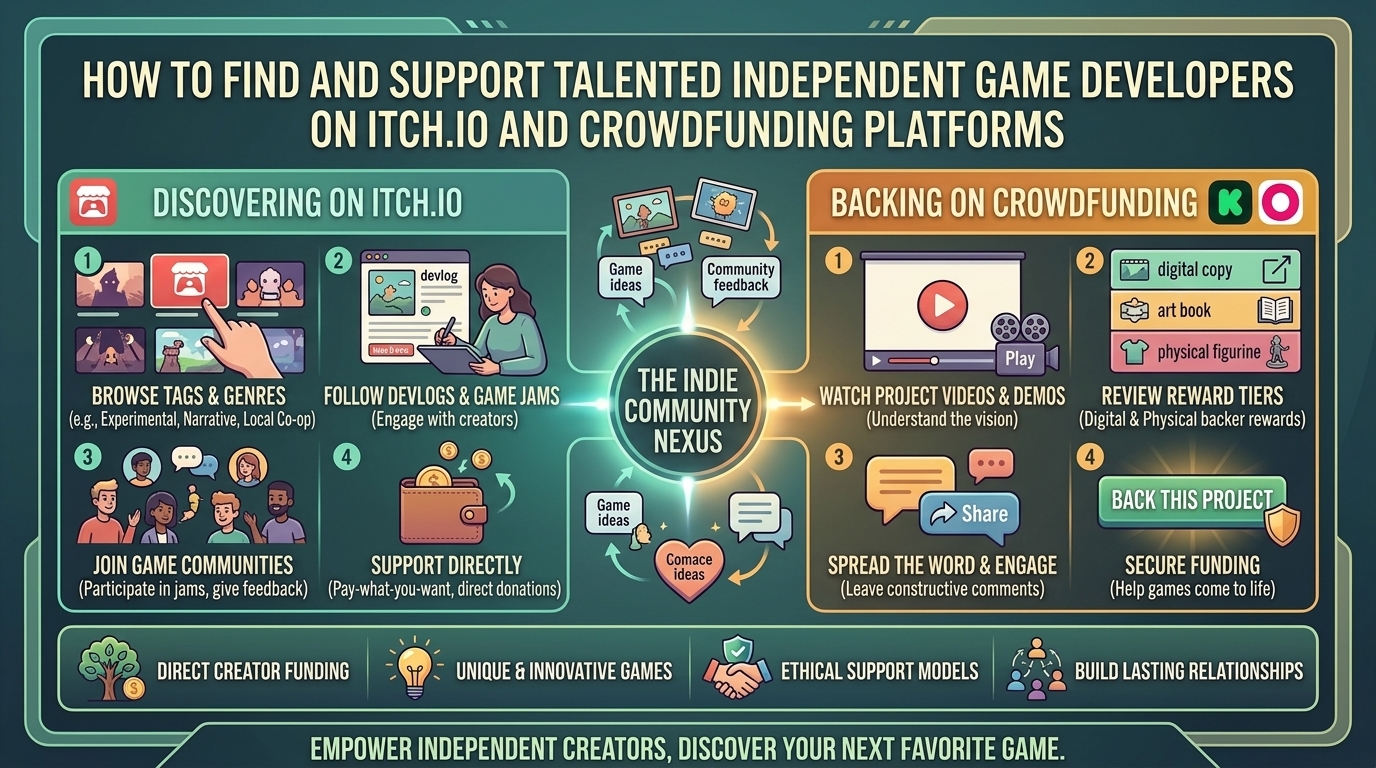
How to Find and Support Talented Independent Game Developers on itch.io and Crowdfunding Platforms
The independent gaming ecosystem is the lifeblood of creative innovation in the video game industry. Free from corporate boardrooms, budget constraints, and risk-averse publishing mandates, solo developers and small indie studios push boundaries—experimenting with unique mechanics, emotional storytelling, and unorthodox art styles.
However, discovering groundbreaking indie titles before they go viral requires knowing where to look and how to navigate grassroots platforms like itch.io, Kickstarter, and BackerKit.
At The Gamer Buzz, we focus on indie game coverage, playtesting early builds, tracking crowdfunding metrics, and helping gamers discover hidden digital gems. This comprehensive guide covers how to discover underground developers, evaluate crowdfunding projects safely, and support small studios across major creative hubs from Texas and California to tech centers in San Francisco, Washington, and New York.
1. Navigating itch.io: The Premier Hub for Indie Discovery
Unlike traditional digital storefronts, itch.io acts as an open, creator-first marketplace. It serves as the primary testing ground for experimental prototypes, game jam entries, and niche genre titles.
Key Search & Filtering Strategies on itch.io
- Filter by Tag Combinations: Instead of browsing broad categories like “Action,” combine specific sub-genre tags (e.g.,
tactical-deckbuilder+pixel-artorpsychological-horror+ps1-style) to unearth targeted titles. - Explore Game Jam Entries: Game jams—such as Ludum Dare, GMTK Game Jam, and Global Game Jam—force developers to build playable games within 48 to 72 hours. Browse jam submission pages to find raw, innovative mechanics that often evolve into full commercial releases.
- Utilize the “Name Your Own Price” Model: Many itch.io games are listed as free or pay-what-you-want. Tip creators directly on the platform to help fund their ongoing development.
- Follow Developers and Playtesters: When you find a project you enjoy, follow the creator’s itch.io profile to receive automatic updates when they release dev logs, patches, or new games.
+--------------------------------------------------------------------------+
|                  THE INDIE GAME DISCOVERY PIPELINE                       |
+------------------------------------+-------------------------------------+
| 1. EARLY PROTOTYPING (itch.io)     | Free/Pay-what-you-want builds  |
|    Game Jams & WebDemos            | Raw mechanics, direct player feedback|
+------------------------------------+-------------------------------------+
| 2. CROWDFUNDING & VALIDATION       | Kickstarter / BackerKit campaigns   |
|    Vertical Slices & Alpha Builds  | Financial backing, community hubs   |
+------------------------------------+-------------------------------------+
| 3. FULL COMMERCIAL RELEASE         | Steam / Console Ports / GOG         |
|    Polished Game & DLC Launch      | Broader market distribution         |
+------------------------------------+-------------------------------------+
2. Master Crowdfunding Platforms (Kickstarter & BackerKit)
Backing an indie game on Kickstarter or BackerKit turns you into a patron of the arts, funding game development during its critical pre-production phases. However, crowdfunding carries inherent risks.
Backer Evaluation Checklist
| Criteria | Green Flag (Safe to Back) | Red Flag (Exercise Caution) |
| Playable Demo | Downloadable vertical slice or itch.io build available | Concept art only; no working code shown |
| Developer Track Record | Previous shipped titles, active itch.io history, or verified dev experience | Brand-new account with zero past portfolio or public history |
| Budget & Scope | Realistic funding goal matched to scope and team size | Massive open-world 3D RPG requesting only $10,000 |
| Community Communication | Regular dev logs, active Discord, clear roadmap | Infrequent updates, vague timelines, unanswered backer questions |
| Reward Tier Balance | Digital game keys, artbooks, and reasonable physical tiers | Overly complex physical merch tiers that inflate shipping risks |
3. How to Support Indie Developers Beyond Financial Pledges
Financial backing is vital, but non-monetary community support is equally effective for helping indie games gain algorithmic traction on platforms like Steam, itch.io, and YouTube:
1.Step 1: Wishlist and Follow Games on Steam:Signal demand to storefront algorithms.
Adding an unreleased indie game to your Steam Wishlist is one of the single most impactful free actions you can take. Steam’s discovery queue prioritizes titles with high wishlist volume, increasing their visibility to broader audiences during launch week.
2.Step 2: Provide Constructive Playtest Feedback:Help developers refine mechanics and fix bugs.
Download alpha builds or itch.io demos and submit clear, detailed feedback via developer Discord servers or itch.io comment sections. Highlight bug repro steps, UI clarity issues, and balance suggestions.
3.Step 3: Amplify Coverage via Content & Social Media:Expand the project’s organic reach across social networks.
Share gameplay GIFs, fan art, and Let’s Play clips on X (formerly Twitter), Bluesky, TikTok, and Reddit. Tagging creators helps them reach publishers, gaming journalists, and content creators.
10 Frequently Asked Questions (FAQ)
1. Is itch.io safe to download indie games from?
Yes. itch.io hosts thousands of safe indie projects. However, always exercise standard web safety: download from verified developer pages, read user reviews, and keep your anti-virus software active when launching executable files.
2. What is the difference between a “vertical slice” and a full game demo?
A vertical slice is a fully polished, short segment of a game designed to showcase final graphics, audio, and core gameplay mechanics to backers or publishers. A demo may cover early tutorial areas or testing rooms.
3. What percentage of project revenue goes to developers on itch.io?
itch.io features an open revenue-sharing model where developers can set their own split percentage—ranging from 0% up to 100% to the creator.
4. What happens if a Kickstarter video game project fails to reach its funding goal?
Kickstarter operates on an “All-or-Nothing” model. If a campaign fails to hit 100% of its target goal by the deadline, your credit card is never charged.
5. Can I get a refund on a crowdfunded game if development is delayed?
Crowdfunding pledges are not traditional purchases; they are financial contributions supporting creative projects. Refund policies depend on individual developer discretion once campaign funds are processed.
6. What is BackerKit and how does it relate to Kickstarter?
BackerKit is a pledge management and crowdfunding platform. Developers use it to run standalone campaigns or manage post-campaign surveys, physical shipping add-ons, and late-pledge options.
7. Why do indie developers launch games on itch.io before releasing on Steam?
itch.io allows developers to publish early builds instantly without paying Steam’s $100 app submission fee, making it ideal for rapid prototyping, gathering playtest data, and hosting game jam submissions.
8. How can I join closed beta tests for upcoming indie games?
Join developer Discord servers, subscribe to creator newsletters, and follow game jam pages on itch.io. Developers frequently post open calls for community beta testers on these channels.
9. Are physical rewards (like custom vinyl or artbooks) worth backing on crowdfunding sites?
Physical reward tiers offer great collector items, but they carry manufacturing and shipping delays. If you want to support development with minimal fulfillment risk, choose digital game tiers.
10. How do Steam keys work when buying games on itch.io?
Many indie developers bundle Steam keys with purchases made on itch.io. Check the game’s store page for the “Includes Steam Key” badge before purchasing.
Conclusion
Discovering and supporting indie game developers on platforms like itch.io, Kickstarter, and BackerKit connects you directly with the future of game design. Whether you are tipping creators for free web demos, backing ambitious campaigns, or wishlisting games on Steam, your support empowers independent studios to build creative, risk-taking titles.
For more indie game recommendations, dev logs, and hardware optimization guides across Texas, California, San Francisco, Washington, and New York, stay tuned to The Gamer Buzz.
Leave a Reply