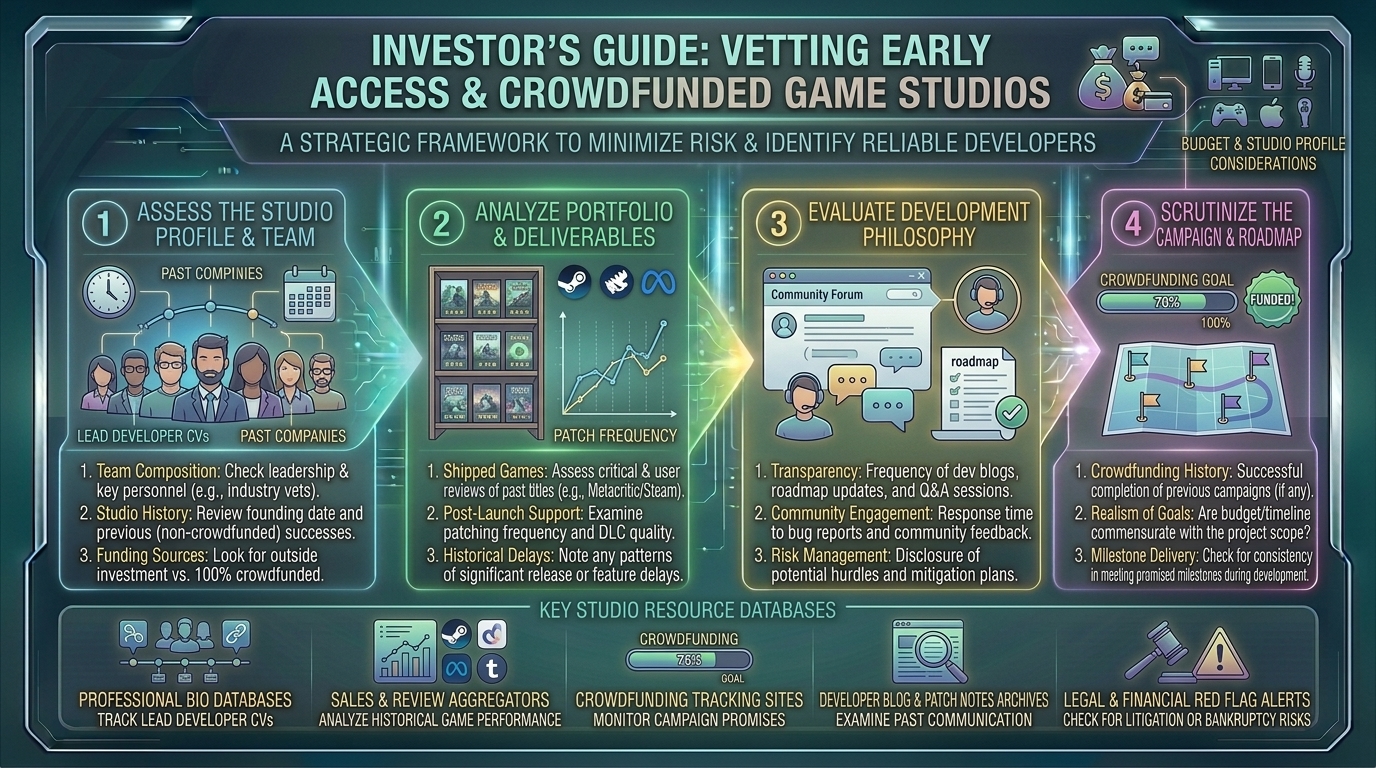
Welcome to thegamerbuzz, your definitive digital authority on industry transparency, consumer protection, and smart gaming investments. Whether you are analyzing Kickstarter roadmaps late at night in a New York high-rise, evaluating developer compliance metrics in San Francisco, auditing studio history across Texas and Washington, or curating your digital wishlist from sunny California, we know one fundamental truth: backing an unreleased game is a financial gamble.
The allure of early access and crowdfunding platforms (such as Kickstarter, Fig, and Steam Early Access) is undeniable. They give players a voice in development, offer exclusive backer rewards, and allow small independent teams to build ambitious projects that traditional publishers would reject. However, the landscape is also littered with abandoned vaporware, broken promises, and studios that took the money and vanished.
Before you invest your hard-earned cash into an unfinished vision, you need to know how to perform a rigorous background check on the people behind the code. This comprehensive master-level guide breaks down how to research game developer studio track records like a veteran industry insider.
1. The Golden Rule of Crowdfunding: Buy for Today, Not Tomorrow
Valve’s official Steam Early Access philosophy states a golden rule that every backer should memorize: Never buy an early access or crowdfunding game based on promises of what it might become; only buy it if you are happy with what it is right now.
When you open your wallet for a project in development, you are not buying a finished product—you are venture capital funding a creative experiment. Prototypes can fail, funding can dry up, key programmers can quit, and scope creep can kill a studio. Conducting a thorough track record evaluation minimizes those risks drastically.
2. Step 1: Investigate the Human Beings, Not Just the Studio Name
Flashy studio logos and cinematic pitch trailers can be outsourced to marketing agencies for thousands of dollars. To truly understand a project’s viability, you must look past the brand name and research the individual developers and key leaders behind the keyboard.
- Who is the Project Lead or Creative Director? Search their name on MobyGames, LinkedIn, or Wikipedia. Have they shipped games before? Were those past projects completed successfully, or do they have a history of launching broken, abandoned alphas?
- Check for Industry Veterans vs. First-Time Novices: First-time indie developers often underestimate the sheer logistical nightmare of project management, code optimization, and budgeting. While debut teams can produce masterpieces, they carry a statistically higher risk of failure due to inexperience.
- The “Ex-AAA” Marketing Trap: Be cautious of marketing blurbs that state “Created by veterans of BioWare and Blizzard!” Ask yourself: What specific roles did they hold? A former senior texture artist or junior audio designer does not automatically possess the architectural skills required to direct an entire open-world RPG.
3. Step 2: Audit Past Projects and Delivery History
A studio’s past behavior is the single most accurate predictor of its future performance. Look into every previous title the studio or its core members have touched.
- Did they finish their last game? Check if their previous titles made it out of early access/crowdfunding, or if they sat in a permanent state of “alpha updates” for five years before going dark.
- Analyze Historical Steam Reviews & Patch Logs: If their previous game launched on Steam, look at the review history graphs. Did the developers stick around to squash bugs and deliver roadmap milestones, or did they cut and run the moment the initial sales wave slowed down?
- Check Community Reputations: Search Reddit, specialized forums, and social media platforms for the studio’s name paired with terms like “controversy,” “drama,” “silence,” or “unfulfilled rewards.”
4. Step 3: Analyze the Scope, Budget, and “Scope Creep”
Many crowdfunding campaigns and early access games fail not out of malice, but out of catastrophic financial mismanagement and scope creep (the continuous expanding of a game’s features far beyond its initial budget).
- Evaluate the Funding Goal vs. Game Ambition: If a team is promising a massive, next-gen, multiplayer open-world MMORPG with photorealistic graphics and thousands of hours of gameplay, but their Kickstarter goal is only $30,000, run away immediately. That budget wouldn’t cover payroll for three developers for two months, let alone server infrastructure.
- Beware of Excessive Stretch Goals: Be suspicious of campaigns that bombard you with dozens of flashy stretch goals (“If we hit $100k, we add pets! If we hit $200k, we add space travel!”). Every added feature increases development time, testing complexity, and financial burn rate.
5. Step 4: Check Communication Frequency and Transparency
A studio’s communication habits during an active crowdfunding campaign or early access phase tell you everything you need to know about their professional integrity.
- Look at Dev Blog Consistency: Do they post regular, transparent development updates (complete with behind-the-scenes progress, hurdles faced, and actual gameplay footage), or do they go silent for months at a time?
- How Do They Handle Criticism? Check their community Discord server or Steam discussion boards. Do community managers and developers engage constructively with player feedback and bug reports, or do they ban users, delete critical feedback, and display defensive hostility?
6. Frequently Asked Questions (FAQ)
1. Are crowdfunding platforms legally obligated to refund my money if a game is canceled?
Generally, no. Platforms like Kickstarter and Indiegogo operate under terms stating that creators are entering a direct contract with backers to use reasonable efforts to complete a project, but refunds are rarely legally mandated or enforced if a studio goes bankrupt.
2. What is the biggest red flag that a crowdfunding game is a scam?
The use of AI-generated promotional art, stolen gameplay footage from other AAA titles, completely anonymous team members with no verifiable LinkedIn history, and promises of impossible gameplay mechanics on a tiny budget are major red flags.
3. How long do most successful early access games stay in development?
While every project varies, successful early access titles typically spend between 1 to 3 years refining their builds with community feedback before releasing version 1.0. If a game has been in early access for 6+ years with sparse updates, exercise extreme caution.
4. Can I get a refund on a Steam Early Access game if it turns out bad?
Yes! Steam’s standard refund policy applies equally to Early Access titles: you can request a full refund within 14 days of purchase as long as you have played less than 2 hours.
5. Why do successful AAA studios sometimes use Early Access?
Some established independent and mid-tier studios use Early Access as a community stress-testing tool to balance gameplay, scale server loads, and gather community telemetry before a final platform launch.
6. How can I verify if a developer’s past studio went bankrupt?
You can search corporate registries, gaming journalism retrospectives, or bankruptcy liquidation filings. If key principals have a string of liquidated LLCs behind them under different studio names, treat them with high skepticism.
7. What is “feature creep” and why does it kill indie games?
Feature creep occurs when developers continuously say “yes” to new backer ideas, bloating the game with unnecessary mechanics that delay core development until the studio runs out of operating capital.
8. Is it safe to back physical rewards (like board games or collector statues) on crowdfunding sites?
Physical manufacturing and international shipping logistics have become notoriously volatile. Many video game crowdfunding campaigns lose massive amounts of their development budget trying to fulfill physical rewards.
9. Where can I find honest, un-sponsored reviews of early access games?
Look to community-driven platforms like Steam user review histograms (checking “Recent Reviews” versus “Overall Reviews”) and independent creators who explicitly disclose sponsored content.
10. What should I do if a game I backed goes completely dark and abandons development?
Document all communications, updates, and original pledge promises. While direct financial recourse is rare, you can report fraudulent campaigns to the hosting platform and share your experience to warn other consumers within the gaming community.
7. Conclusion
Researching game developer studio track records takes patience, skepticism, and detective work, but it is the ultimate shield against losing money on unfulfilled promises. By auditing past team history, scrutinizing realistic budgets, examining community transparency, and buying games based on their present state rather than future hype, you protect your wallet and support truly passionate developers.
Invest smart, research deep, and stay ahead of the curve right here with thegamerbuzz!
What is the best early access or crowdfunding game you’ve ever backed that actually delivered on every single promise?
Leave a Reply