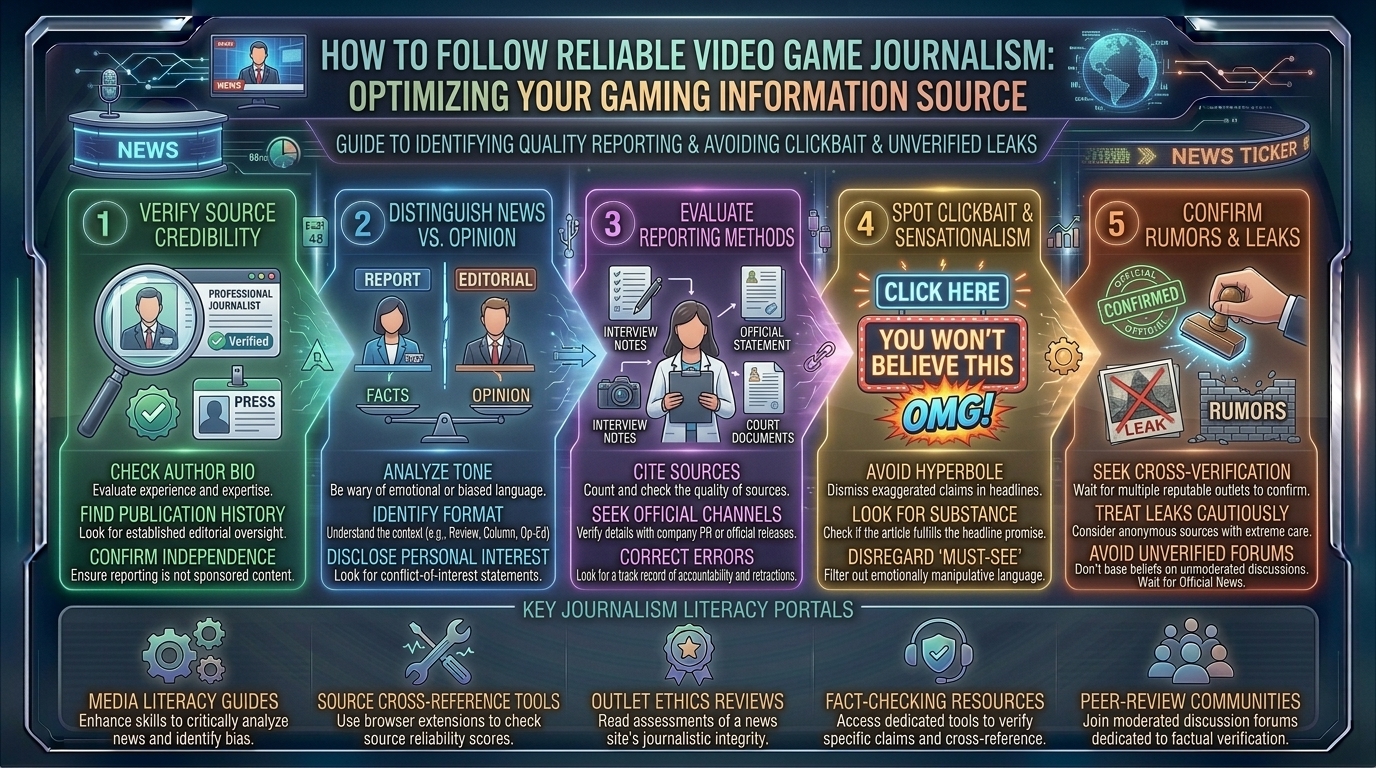
How to Follow Reliable Video Game Journalism Outlets and Avoid Clickbait Rumors and Unverified Leaks
Welcome to thegamerbuzz.com! Whether you are tracking the pulse of the interactive entertainment industry from a fast-paced media startup in New York or San Francisco, analyzing consumer trends across Washington and Texas, or just checking out breaking announcements from the comfort of your home in California, staying informed about video game news requires a critical eye.
The modern internet economy thrives on engagement metrics. In the battle for your attention, sensationalized headlines, unverified forum whispers, and manufactured rage-bait often spread faster than verified, professional reporting. For passionate gamers, developers, and industry watchers, sorting fact from fiction is essential.
This comprehensive master guide explores how to identify trusted video game journalism outlets, decode corporate PR spin, spot clickbait and unverified leaks from a mile away, and curate a healthy, reliable news diet.
1. The Anatomy of Modern Video Game Journalism
To understand how to filter the noise, you first need to understand how the sausage is made. Video game journalism generally follows a distinct lifecycle:
- The Reveal Phase: Publishers officially announce a title via cinematic trailers, developer deep-dives, or media showcase events. Information here is strictly controlled by corporate public relations (PR).
- The Preview Phase: Outlets are invited to hands-on preview events or given closed beta access. Journalists report on their controlled, hands-on experiences, providing early impressions.
- The Review Phase: Final game codes are distributed ahead of launch. Independent critics evaluate the complete experience under strict embargo conditions, delivering scored reviews and analytical critiques.
When news outlets step outside this structured cycle—relying on anonymous forum posts, data-mined strings of text, or vague insider claims—they enter the realm of rumors and leaks.
2. Red Flags: How to Spot Clickbait and Unverified Leaks
Internet culture loves a good conspiracy or a juicy insider leak, but malicious actors and low-tier blogs weaponize hype for ad revenue. Watch out for these classic warning signs:
+-------------------------------------------------------------------------+
                      CLICKBAIT & LEAK RED FLAGS
+-------------------------------------------------------------------------+
  1. Vague Sourcing     -> "An insider close to the project says..." (No names/proof)
  2. Outrage-Bait Titles -> "X Developer DESTROYS Fanbase With HUGE Mistake!"
  3. Absolute Certainty -> Treating 4chan forum text files as verified facts.
  4. Circular Reporting -> Blog A quotes Blog B, which quoted an unverified Reddit post.
+-------------------------------------------------------------------------+
- The “Anonymous Insider” Fallback: If an article relies entirely on unverified, anonymous sources without corroborating evidence or a proven track record of accurate insider reporting, take it with a massive grain of salt.
- Circular Sourcing Loops: This occurs when a random post on Reddit or a 4chan board is picked up by a small blog, which is then quoted by a slightly larger site, until mainstream aggregators treat a fabricated rumor as “breaking news.” Always trace the origin of a claim.
- Emotional Manipulation: Headlines designed to make you instantly angry, panicked, or overly hyped are engineered for clicks rather than truth. Real journalism uses measured, objective language.
3. Characteristics of Trusted Video Game Outlets
Reliable journalism adheres to professional ethics, transparency, and accountability. When evaluating a gaming news outlet, look for these markers of quality:
- Clear Correction Policies: Reputable publications readily admit when they get something wrong. They issue clear, visible editor’s updates or corrections when new facts emerge.
- Separation of Church and State (Editorial Independence): High-tier outlets maintain strict boundaries between their commercial advertising departments and their editorial review teams, ensuring reviews cannot be bought or influenced by publisher ad spend.
- Original Reporting and Interviews: Instead of just rewriting press releases or copying other people’s scoops, trusted outlets invest in original investigative pieces, developer interviews, and deep-dive technical analysis (such as frame-rate and asset analysis).
4. Pro Tips for Building a Clean, Reliable News Diet
- Cross-Reference Major Announcements: If a massive leak drops (e.g., a major studio acquisition or an unannounced game sequel), wait to see if established industry reporters with verified track records (such as journalists from Bloomberg, Eurogamer, or major trade publications) corroborate the story.
- Follow Credible Individual Journalists: Often, reliable reporting comes from specific, veteran journalists who have cultivated trusted industry sources over decades. Follow these individuals directly rather than relying solely on aggregate content farms.
- Treat Data-Mines as Possibilities, Not Promises: Data-mining game files (extracting unreleased audio, text strings, or placeholder assets from game updates) can reveal interesting clues, but developers frequently cut, alter, or repurpose content. Never treat a data-mine as a confirmed feature.
- Support Independent and Specialized Critics: Look beyond mainstream news aggregates. Specialized sites focusing on deep technical breakdowns, preservation history, or indie game spotlights often provide the most honest and passionate coverage in the industry.
10 Frequently Asked Questions (FAQs)
1. Are leaks always bad for the video game industry?
Not always. Sometimes harmless leaks build organic community excitement or build hype for an upcoming announcement. However, malicious leaks can ruin years of narrative surprises for developers and disrupt corporate marketing plans.
2. How can I tell if a Reddit rumor or 4chan leak is real?
Look for verifiable hard evidence—such as copyrighted internal design documents, matching registration trademarks, or corroboration from journalists with proven track records. If it’s just text typed into an anonymous post, assume it is fiction.
3. What is “review bombing” and how does it affect journalism?
Review bombing is when large groups of users flood a game’s aggregate score page with negative reviews to protest external political, social, or corporate grievances, often before even playing the game. Good journalism separates organic critique from coordinated user campaigns.
4. Do game publishers pay review outlets for high scores?
No reputable publication accepts payment for review scores. Doing so destroys their credibility and editorial integrity. However, publisher-hosted junkets (trips for press to preview games) can sometimes create subtle conflicts of interest, which professional sites are expected to disclose.
5. Why do some websites publish articles based on unverified rumors?
Traffic and ad revenue. Sensationalized headlines about unverified rumors generate immediate clicks, social media shares, and ad impressions, even if the report turns out to be entirely false.
6. What is corporate PR “spin”?
PR spin is the deliberate framing of information by game publishers to highlight positive milestones while downplaying flaws, delays, or technical problems. Good journalists look past this spin by testing games independently.
7. How do review embargoes work?
Publishers give critics games ahead of launch under an “embargo agreement” that specifies an exact date and time when reviews can be published. This ensures all outlets publish simultaneously and prevents rushed, low-quality review races.
8. Are content creators on YouTube and TikTok reliable news sources?
Some are exceptional and provide thoughtful analysis, but many rely on sensationalized thumbnails and unverified rumors to satisfy algorithmic demands for daily uploads. Always verify claims made by independent creators.
9. Why do game trailers sometimes look different from final release graphics?
Often labeled as “vertical slices” or cinematic renders, early promotional trailers show idealized targets or pre-rendered sequences rather than real-time gameplay running on consumer hardware.
10. How can I support ethical, reliable video game journalism?
Turn off aggressive ad-blockers for sites you trust, subscribe to independent creator patreons or ad-free tiers, share well-researched articles, and avoid clicking on obvious clickbait rage-farming sites.
Conclusion
Navigating the vast ecosystem of video game journalism requires a blend of media literacy, skepticism, and patience. By learning to identify clickbait triggers, ignoring unverified forum leaks, and prioritizing outlets that champion editorial independence and transparency, you can stay genuinely informed. Whether you are running a budding publication in New York or analyzing media consumption trends across Texas, California, and Washington, championing truth in gaming ensures our community remains sharp, knowledgeable, and passionate.
Leave a Reply