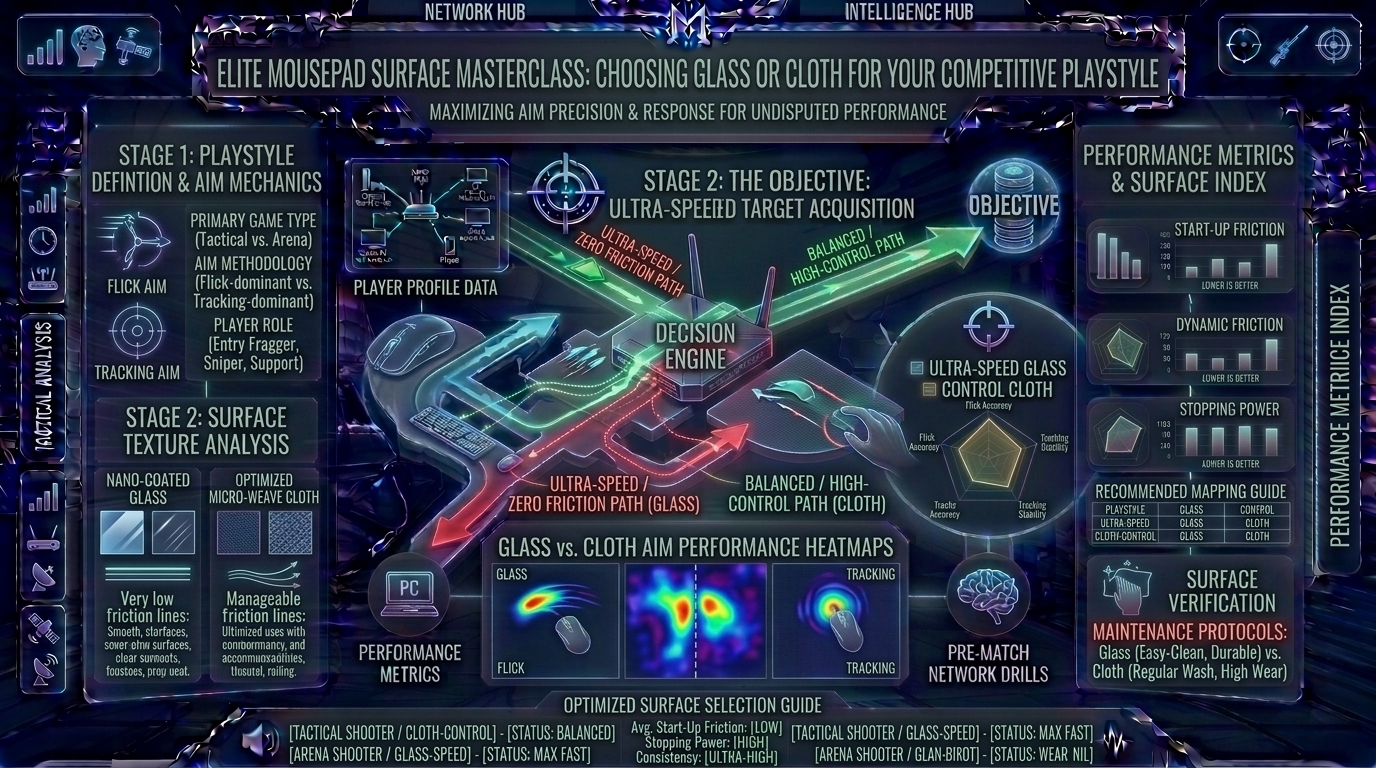
how to choose the right glass or cloth mousepad surface texture for your specific competitive playstyle needs
Welcome to The Gamer Buzz, your ultimate destination for competitive esports performance analysis, peripheral breakdowns, and hardware setups tuned for winning. Whether you are dialing in your tracking aim from a tech hub in San Francisco, New York, or Seattle, or building out your ultimate competitive rig in Texas, California, or Washington, one often-overlooked peripheral holds the key to your aiming mechanical precision: your mousepad surface texture.
For years, mousepads were treated as afterthoughts—cheap pieces of fabric slapped onto a desk to prevent wooden surfaces from scratching. However, in modern competitive titles like Counter-Strike 2, Valorant, Apex Legends, Overwatch 2, and Call of Duty, the mousepad surface is half of the aiming equation. The interaction between your mouse’s PTFE or glass skates and the pad’s material dictates your physical friction, stopping power, micro-adjustment capability, and aiming consistency.
Today, the competitive scene is split down the middle in an intense debate: Glass vs. Cloth (and hybrid surfaces).
Should you chase the friction-free, lightning-fast glide of tempered glass, or do you need the tactile stopping power of a high-density, control-focused cloth pad? In this comprehensive, master-level guide, we break down mousepad physics, material science, aim mechanics, and step-by-step selection frameworks to help you choose the perfect surface for your exact competitive playstyle.
1. The Physics of Mousepad Surfaces: Static vs. Dynamic Friction
To understand how a mousepad impacts your aim, you must first master the two fundamental physical forces that occur whenever you move your mouse: static friction and dynamic friction.
[Mouse at Rest] ➔ [Break Static Friction (Initial Motion)] ➔ [Dynamic Friction (Glide)] ➔ [Stopping Power (Deceleration)]
Static Friction (Initial Breakaway Force)
- What it is: The physical resistance you must overcome to start moving your mouse from a complete standstill.
- Why it matters: High static friction makes micro-adjustments feel “sticky” or heavy. Low static friction lets your mouse glide instantly with the slightest twitch of your hand.
Dynamic Friction (Glide Resistance)
- What it is: The continuous resistance your mouse experiences while it is actively sliding across the mousepad surface.
- Why it matters: Dynamic friction dictates how much physical effort is required to sustain long, sweeping tracking motions (like following a fast-moving target across your screen).
Stopping Power (Deceleration / Stopping Force)
- What it is: The pad’s ability to help your hand bring the mouse to a dead stop precisely when you finish a fast flick shot.
- Why it matters: Without adequate stopping power, your hand will overshoot targets, forcing you to waste milliseconds making corrective adjustments.
2. Glass Mousepads: The High-Speed Precision Revolution
Tempered glass mousepads (such as the Superglide Glass Mousepad, SkyPAD/Wallhack 4.0, or Razer Atlas) have stormed the competitive gaming world. Engineered from toughened, micro-etched tempered glass, these pads offer an entirely different aiming sensation compared to traditional fabric.
The Advantages of Glass Mousepads
- Near-Zero Static Friction: Glass surfaces eliminate the “tug” when starting a movement. Micro-adjustments feel effortless because the initial resistance is virtually nonexistent.
- Infinite Durability & Easy Maintenance: Unlike cloth pads that degrade, fray, absorb skin oils, and develop slow spots over months of use, glass pads never wear out. A quick wipe with a microfiber cloth and glass cleaner restores them to day-one condition instantly.
- Unmatched Consistency: Glass is impervious to humidity, sweat, and temperature fluctuations. Your glide remains 100% identical whether you play in a cold room or a humid summer environment.
The Drawbacks of Glass Mousepads
- Zero Natural Stopping Power: Because friction is so low, your hand muscles must do 100% of the physical work to stop the mouse. If you lack elite motor control, your flick shots will consistently overshoot.
- Debris Sensitivity: A single speck of dust, hair, or skin flake on a glass pad creates a crunchy, jarring sensation under your mouse skates.
- Sleeve Requirement: Human skin sticks to glass. Playing on a glass pad virtually requires wearing a compression arm sleeve to prevent your forearm from dragging against the surface.
- Rapid Skate Wear: Glass eats standard PTFE (Teflon) mouse feet for breakfast. You will need to replace your mouse skates significantly more often.
3. Cloth Mousepads: The Classic Tactile Control Standard
Cloth mousepads remain the most popular choice among professional esports athletes, particularly in tactical shooters. Fabric pads range from soft, mud-like control surfaces to tightly woven, water-resistant hybrid speed pads.
The Advantages of Cloth Mousepads
- Superior Stopping Power & Feedback: The soft base foam (poron or rubber) under the fabric allows you to press down slightly with your wrist or hand to dig your mouse skates into the pad, creating on-demand braking force for precision flicks.
- Tactile Comfort: Soft fabric feels warm, cushioned, and natural against your wrist and forearm, eliminating the need for compression sleeves.
- Forgiving Ergonomics: Cloth pads absorb minor hand tremors and micro-shakes, providing a smoother, more stabilized crosshair feel for players with higher sensitivities.
The Drawbacks of Cloth Mousepads
- Humidity Sensitivity: Standard cloth fibers absorb ambient moisture. On humid days, a soft cloth pad can feel muddy, sticky, and drastically slower than on dry days.
- Wear & Slow Spots: Over time, skin oils, dead skin cells, and physical friction wear down the fabric fibers, creating permanent “slow spots” in the center of the pad.
4. The Mousepad Surface Spectrum: Speed vs. Control Matrix
| Surface Category | Representative Examples | Friction Level | Ideal Game Genres | Best Playstyle / Aiming Style |
| Ultra-Fast Glass | Wallhack (SkyPAD) 4.0, Superglide Glass | Near-Zero Static / Ultra-Low Dynamic | Fast Trackers (Apex Legends, Overwatch 2) | Wrist/Arm Trackers with elite motor control. |
| Hybrid / Speed Cloth | Artisan Raiden, Lethal Gaming Gear Neptune | Low Static / Moderate-Low Dynamic | Fast Shooters & Battle Royales | High-speed flickers who want low resistance. |
| Balanced / All-Rounder | Artisan Zero, Saturn Pro, SteelSeries QCK | Balanced Static / Moderate Dynamic | All Genres (CS2, Valorant, Apex) | Hybrid players wanting equal speed and control. |
| Control / Slow Cloth | Zowie G-SR, Gamesense Radar | Moderate-High Static / High Dynamic | Tactical Shooters (CS2, Valorant) | Low-sensitivity arm shooters who prioritize precision stopping. |
5. How to Choose Based on Your Game and Aiming Mechanics
Scenario A: The Tactical Shooter Specialist (CS2, Valorant)
- Primary Requirement: Extreme stopping power, crisp static crosshair placement, and zero overshooting on headshots.
- Recommended Choice: Control to Balanced Cloth Pads (e.g., Artisan Zero, Saturn Pro, Zowie G-SR-SE). The tactile braking force helps anchor your crosshair onto tight angles without accidental micro-drifting.
Scenario B: The Tracking Battle Royale Competitor (Apex Legends, Overwatch 2, The Finals)
- Primary Requirement: Smooth, continuous multi-directional tracking of fast-moving targets, verticality adjustments, and zero initial movement resistance.
- Recommended Choice: Glass Mousepads or Hybrid Speed Pads (e.g., Wallhack 4.0, Artisan Raiden). The low static friction allows your crosshair to track erratic enemy strafes without stuttering or catching on fabric fibers.
10 Frequently Asked Questions (FAQ)
1. Are glass mousepads better than cloth mousepads for competitive gaming?
Neither is universally “better.” Glass pads excel in fast tracking, durability, and humidity resistance, while cloth pads provide superior stopping power, tactile control, and comfort. The right choice depends on your game genre and physical control preferences.
2. Can I use glass skates on a glass mousepad?
No! Never use glass mouse skates on a glass mousepad. Glass-on-glass contact will cause extreme scratches, ruin both surfaces, and destroy your glide. Always use standard PTFE (Teflon) or specialized UHMWPE skates on glass pads.
3. Do I need to wear an arm sleeve when using a glass mousepad?
Yes, in almost all cases. Your skin’s natural moisture and sweat will stick to the smooth glass surface, creating heavy drag. A smooth compression arm sleeve allows your forearm to glide effortlessly alongside your mouse.
4. How long does a good cloth mousepad last before needing replacement?
High-end cloth pads with dense Poron bases (like Artisan or Lethal Gaming Gear) typically last 1 to 2 years with proper cleaning. Budget cloth pads often show wear and slow spots within 3 to 6 months of daily competitive play.
5. How do I properly clean a glass mousepad?
Glass pads are effortless to maintain. Spray the surface with a standard glass cleaner or isopropyl alcohol solution and wipe it clean with a lint-free microfiber cloth. It dries instantly and is ready for immediate play.
6. How do I clean a cloth mousepad without ruining the surface texture?
Fill a bathtub or sink with lukewarm water and a few drops of mild liquid dish soap or baby shampoo. Gently scrub the fabric surface using a soft microfiber cloth, rinse thoroughly with cool water to remove all soap residue, and let it air dry completely flat for 24 hours.
7. What base foam firmness should I choose for my cloth pad (Soft, Mid, Extra Soft)?
- Mid: Provides a firm, consistent surface similar to a hard pad with zero cushion sink.
- Soft: The industry sweet spot, offering comfortable wrist cushioning and moderate press-down stopping power.
- Extra Soft (XSoft): Allows you to press your mouse deep into the foam for extreme emergency stopping power, though it can feel inconsistent if you push down heavily during normal movement.
8. Does mousepad size matter for competitive gaming?
Yes. Low-sensitivity competitive players who perform wide arm swipes require large or extra-large desk pads (e.g., 490x420mm or larger) to ensure they never run out of physical mouse surface during intense turnarounds.
9. Why does my mouse feel sticky on my cloth pad on rainy or humid days?
Standard cloth fibers absorb water vapor from the air, swelling the fabric and increasing friction against your mouse skates. If humidity is a major issue in your climate, switch to a humidity-resistant hybrid pad or a glass mousepad.
10. Where can I find more hardware and peripheral optimization guides?
Bookmark The Gamer Buzz and check back regularly for our comprehensive database of professional esports hardware breakdowns, mouse reviews, and competitive aiming optimization guides!
Conclusion
Choosing between a glass or cloth mousepad surface texture comes down to understanding your primary game genre, physical aim mechanics, and environment. If you demand zero static friction, effortless high-speed tracking, and infinite durability, step onto a tempered glass pad (and don an arm sleeve). If your gameplay centers on razor-sharp stopping power, tactile feedback, and precise tactical crosshair placement, anchor your setup with a premium control or hybrid cloth pad. Match your surface to your playstyle, calibrate your friction, and click heads with absolute precision!
Leave a Reply