Welcome to thegamerbuzz, your premier digital authority for savvy gaming consumer habits, smart wallet strategies, and ecosystem optimization guides. Whether you are tracking midnight flash sales from a high-rise New York apartment, optimizing your library builds in San Francisco, monitoring release discounts across Texas and Washington, or curating your digital wishlist from sunny California, we know one universal truth: you should never pay full price for a digital game unless you absolutely have to.
With hundreds of digital storefronts, shifting seasonal promotions, and unpredictable publisher sales, navigating the modern gaming marketplace can feel like an expensive guessing game. Is a “50% off” banner on Steam actually a great deal, or did that same game drop to 80% off three months ago?
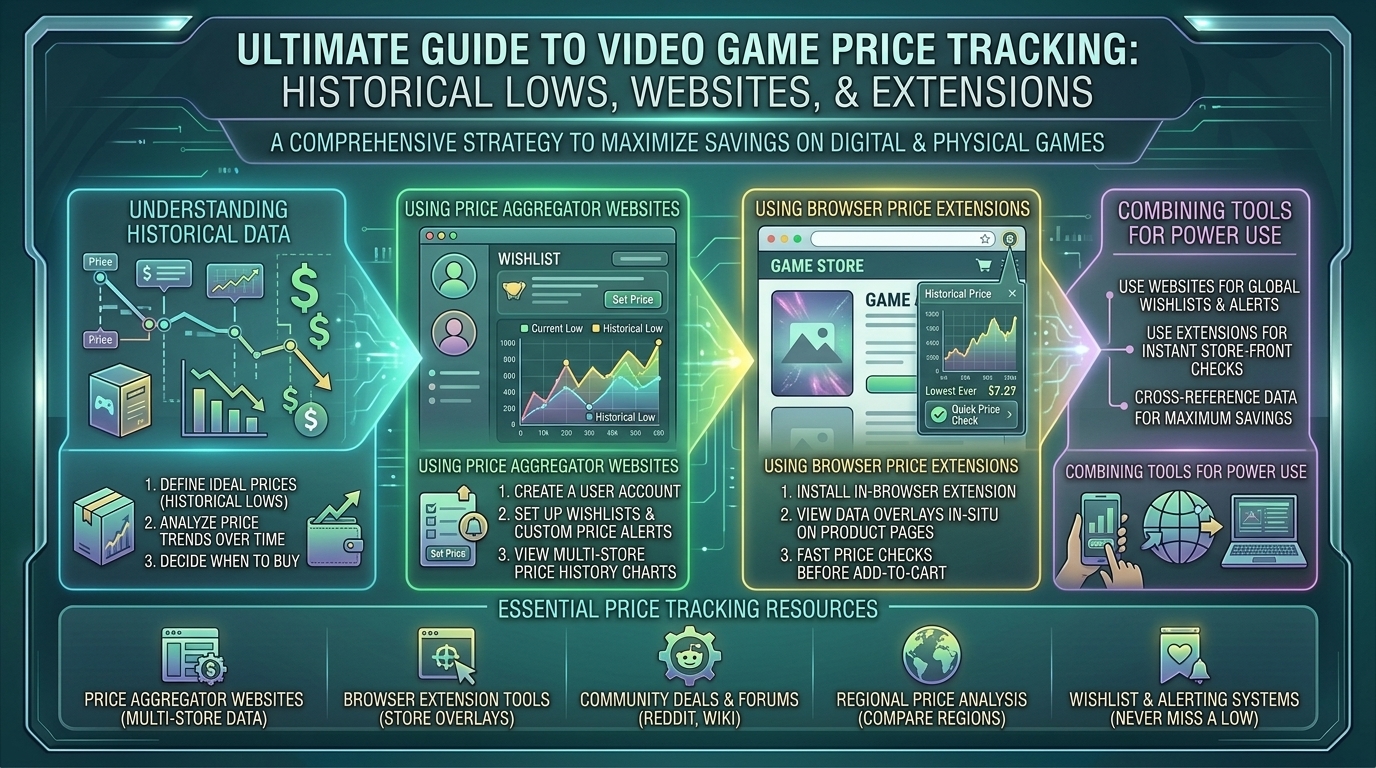
To answer that question with absolute financial confidence, you need to master historical price tracking. This comprehensive, master-level guide explores the best websites, browser extensions, and methodologies used by smart gamers to track price histories, spot historic lows, and never overpay for a game again.
1. The Philosophy of Game Pricing: Why Historical Lows Matter
Digital video games follow a predictable depreciation curve, but unlike physical electronics or clothing, their pricing schedules are entirely controlled by digital storefront algorithms and publisher mandates.
- The Launch Tax: Brand-new AAA titles launch at peak pricing (often $70+).
- The Plateau Phase: For the first 3 to 6 months, prices remain rigid, occasionally dipping during major platform-wide seasonal sales.
- The Deep Discount Curve: After a year on the market, games enter regular rotation for steeper 50% to 75% discounts.
When you rely solely on a storefront’s built-in sale banner, you lack context. A store might advertise a title at “60% off,” making it look like a steal, while price-tracking databases reveal that the game regularly hits 85% off every single month. Tracking historical data stops you from falling victim to artificial urgency.
2. The Best Official Price Tracking Websites
To track real pricing trends safely without exposing your account to unauthorized grey-market risks, rely on community-trusted database platforms that aggregate data exclusively from official, authorized retailers.
1. IsThereAnyDeal (ITAD)
- What It Is: The gold standard for PC gamers worldwide. ITAD tracks real-time pricing and complete price histories across dozens of official storefronts (such as Steam, Epic Games Store, GOG, Humble Store, and Fanatical).
- Key Features: It logs the absolute Historical Low (the lowest price a game has ever legitimately sold for) alongside the date it happened. You can sync your Steam wishlist directly to ITAD to receive automated email or browser notifications the exact moment a game hits your target price threshold.
2. SteamDB (Steam Database)
- What It Is: An indispensable independent database dedicated entirely to the Steam ecosystem.
- Key Features: Every single game page on SteamDB features a clean, transparent graph showing the game’s complete price history over its entire lifespan across every global currency region. You can instantly see how frequently a game goes on sale and whether its current discount matches its historical best.
3. Deku Deals
- What It Is: The absolute premier price-tracking platform for console players (Nintendo Switch, PlayStation 4/5, and Xbox Series X/S).
- Key Features: Console storefronts notoriously lack clear price history charts natively. Deku Deals bridges that gap by tracking physical and digital pricing trends, user review scores, and bundle inclusions across console ecosystems.
3. Essential Browser Extensions and Automated Tools
Manually checking price history charts for every game on your radar can be time-consuming. You can automate the process using browser integrations:
- ITAD Browser Integration & Extension Scripts: Seamlessly injects historical low badges and price comparison boxes directly into your active Steam store browser pages. When browsing Steam natively, you will instantly see a small widget showing if the game is currently cheaper on another official storefront.
- Enhanced Steam / Augmented Steam: Community-driven browser extensions that overhaul the native Steam web interface, displaying lowest-recorded prices, metacritic scores, and direct links to trusted price comparison databases right on the store page.
4. Step-by-Step Strategy to Never Overpay
Follow this simple workflow before pulling the trigger on any digital game purchase:
- Never Buy on Impulse During a Sale: When you see an appealing sale banner, pause. Do not check out immediately.
- Paste the Title into IsThereAnyDeal or SteamDB: Spend 15 seconds checking the price history graph. Look at two metrics: What is the historical low? and How often does it reach that price?
- Evaluate the Timing: If the game is currently sitting at its historical low and you want to play it right now, buy it with confidence. If the current sale price is only a modest 20% discount, but historical charts show it drops by 75% during seasonal blowout events every two months, add it to your wishlist and wait.
- Check Storefront Legitimacy: Ensure that whichever retailer is offering the historic low is an authorized partner. Buying from verified key shops ensures your game license is permanent and secure.
5. Frequently Asked Questions (FAQ)
1. Why do game prices fluctuate so wildly on digital storefronts?
Digital storefront prices are managed by automated publisher algorithms that respond to seasonal sale windows, anniversary events, DLC launches, and sales performance milestones.
2. Are historical low prices on tracking sites guaranteed to return?
Usually yes. If a game hit a historical low of $10 during a major publisher sale three months ago, it is highly likely to match or beat that price during the next major seasonal sale event.
3. Can I track wishlist items across multiple platforms at once?
Yes! Platforms like IsThereAnyDeal allow you to import wishlists from Steam and other stores, centralizing all your alerts into a single dashboard.
4. Do price tracking websites account for regional pricing differences?
Yes, most top-tier trackers allow you to set your specific country and currency region (such as USD for the United States) so you see accurate local pricing and historical lows.
5. What is the difference between an official retailer and a grey-market key site?
Official retailers buy game keys directly from publishers and operate with full authorization. Grey-market sites act as peer-to-peer marketplaces where individual users resell keys, which carries a risk of revoked licenses if purchased using fraudulent funds.
6. How do I set up custom email alerts for price drops?
Create a free account on IsThereAnyDeal or Deku Deals, add games to your collection or wishlist, and configure your notification settings to email you immediately when a game’s price dips below your specified target.
7. Why do some newly released games never show historical lows?
Newly released games (AAA titles less than 6 to 12 months old) rarely receive deep discounts because publishers want to capitalize on initial consumer demand at full retail value.
8. Are browser extensions safe to use on gaming storefronts?
Community-vetted open-source extensions like Augmented Steam are safe, lightweight, and respect user privacy. Always download extensions from official browser web stores and check community reviews.
9. Can I track DLC and expansion pass price histories as well?
Yes, major price trackers index standalone DLCs, expansion passes, and complete Game of the Year bundles alongside base game listings.
10. What is the single best time of year to buy games based on historical data?
Historically, the major seasonal events—such as the Steam Summer Sale (June/July) and the Autumn/Winter Holiday Sales (November–January)—consistently yield the highest number of all-time historical low prices across the entire industry.
6. Conclusion
Mastering historical video game price tracking transforms you from a reactive consumer into a strategic digital shopper. By leveraging powerful database tools like IsThereAnyDeal, SteamDB, and Deku Deals, you eliminate buyer’s remorse, outsmart artificial marketing urgency, and build an incredible gaming library at a fraction of the cost.
Track smart, shop with confidence, and maximize your gaming budget right here with thegamerbuzz!
What is the best all-time historical low deal you’ve ever scored on a game you’ve been dying to play?
The Best PC Game Price Tracker! Sales, Giveaways, Bundles
This video provides a great visual walkthrough on how to use online price tracking tools to monitor PC game sales and secure the best historical discounts.
Leave a Reply